

A & A's Chihuahuas | Breed History Series
The True History of the Chihuahua
What the Newspapers, the DNA, and the Paintings All Tell Us
The full picture is more complex — and far more fascinating — than the story you were told.
The Story We Inherited
The Chihuahua was "discovered" in the Mexican state of Chihuahua in the 1850s. It descended from the Aztec Techichi. It is a native of Mexico and nowhere else. This is the origin story that has been repeated in breed books, on kennel club websites, and in countless magazines for over a century. There is just one problem: the evidence doesn't hold up. Not the DNA evidence, not the historical record, and not the paintings on the walls of ancient buildings that predate Columbus by a decade. The full picture of where the Chihuahua actually comes from is more complex — and far more fascinating — than the tidy tale we inherited. Let's follow the evidence.
Part I: The Dog That Existed Before Columbus
Every argument for a purely Mexican origin of the Chihuahua rests on one foundational assumption: that small, apple-headed, large-eared dogs only existed in the Americas before European contact. That assumption does not survive scrutiny.
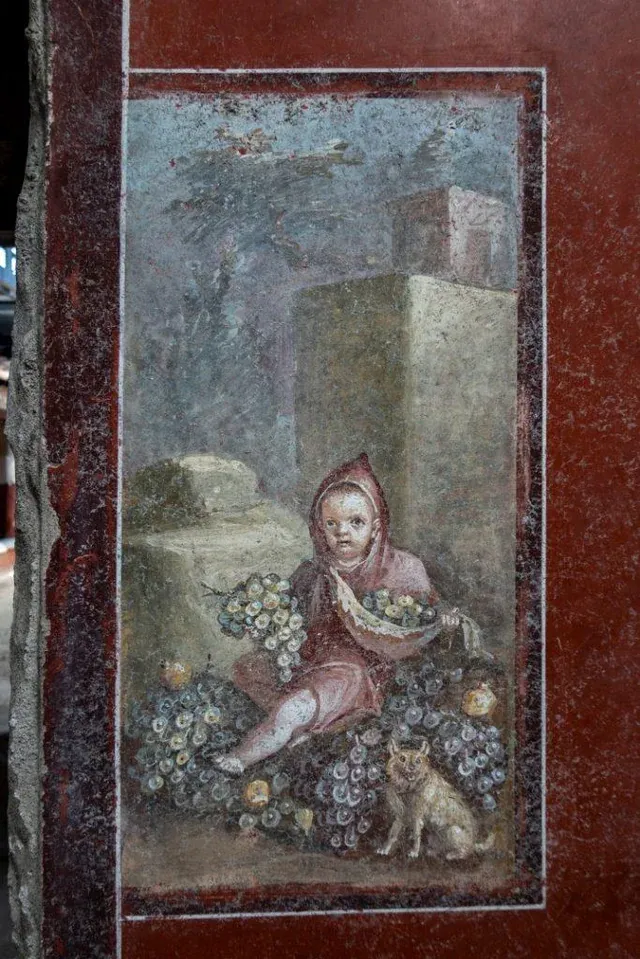
Pompeii, 79 AD: A Baby and a Small Dog
A fresco recently discovered in Pompeii — preserved under volcanic ash since 79 AD — depicts a toddler seated amid fruit, with a small dog beside them that bears a striking resemblance to modern Chihuahuas. This is ancient Roman evidence of small companion dogs in the Mediterranean world nearly 1,500 years before Columbus ever set sail.
Botticelli's Sistine Chapel, 1481–1482: The Dog That Beat Columbus by a Decade
In 1481, the Vatican commissioned Sandro Botticelli to paint a series of frescoes on the walls of the Sistine Chapel. One of them — The Events in the Life of Moses — was completed in 1482, a full decade before Christopher Columbus set foot in the Americas. Look carefully at the lower left of the composition, among the gathered figures, and you will find a small, fine-boned dog that bears an unmistakable resemblance to the Chihuahua.
How does a dog that allegedly didn't exist outside of Mexico appear in the Vatican, painted by a Florentine master, before the New World was known to Europe? The answer that makes logical sense is that this type of small companion dog already existed in the Mediterranean world — and had for some time.

The Malta Connection: The Kelb tal-But
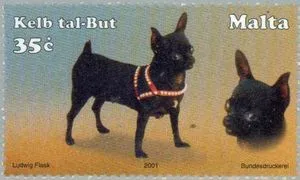
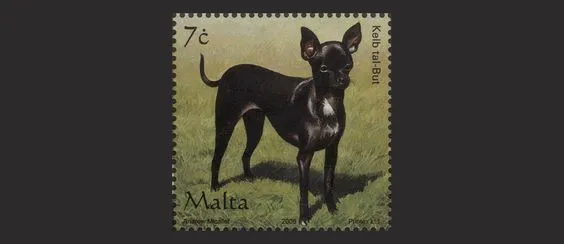
Malta has documented a small bobtailed companion dog — the Kelb tal-But, or "Pocket Dog" — known in the region for centuries. This ancient Mediterranean village dog, related to the Maltese breed, came in two forms: long-tailed and naturally bobtailed. Malta sits at the crossroads of Mediterranean trade and has been a center of small companion dog culture since antiquity. The Spanish conquistadors who sailed to and from the New World passed through exactly this world. It is not a stretch to suggest that small Mediterranean companion dogs — including the Kelb tal-But type — traveled with them.
Part II: The Newspaper Trail — What Americans Were Reading
One of the most powerful pieces of evidence available to historians is the newspaper archive. People don't advertise for lost dogs, write society columns about their pets, or report on business deals in their local paper unless those things are real, current, and part of everyday life. The American newspaper record tells us something extraordinary about the Chihuahua's history in the United States — it stretches back much further than most people realize, and it paints a picture that complicates the simple "discovered in Mexico in the 1850s" narrative considerably.
The following citations come from verified historical newspaper archives. They are presented in chronological order.
Before the Civil War: Already Known by Name
"Lost — On Friday morning, a very small white Mexican dog, hair short and not curling, tan colored ears like a rabbit, a collar with 'Bonny Robinson' on it. A suitable reward will be given if brought to Mrs. Wm. Robinson, Fourth street, between Walnut and Chestnut."
— The Courier Journal, Louisville, KY, February 21, 1860
"LOST — A small Chihuahua DOG, reddish-brown color, white feet, white stripe in the face, cropped ears. When lost had on a dark plaid blanket. Whoever will return said dog to No. 139 F Street, will be well rewarded."
— Evening Star, Washington DC, January 6, 1862
By 1862, the word "Chihuahua" was already being used as a formal breed name in Washington D.C. newspapers — as naturally as one would say "Spaniel" or "Terrier." This was not an exotic novelty just arriving from Mexico. This was an established breed name already familiar to American readers.
In the Parlors of Paris: European Aristocracy and the Tiny Dog
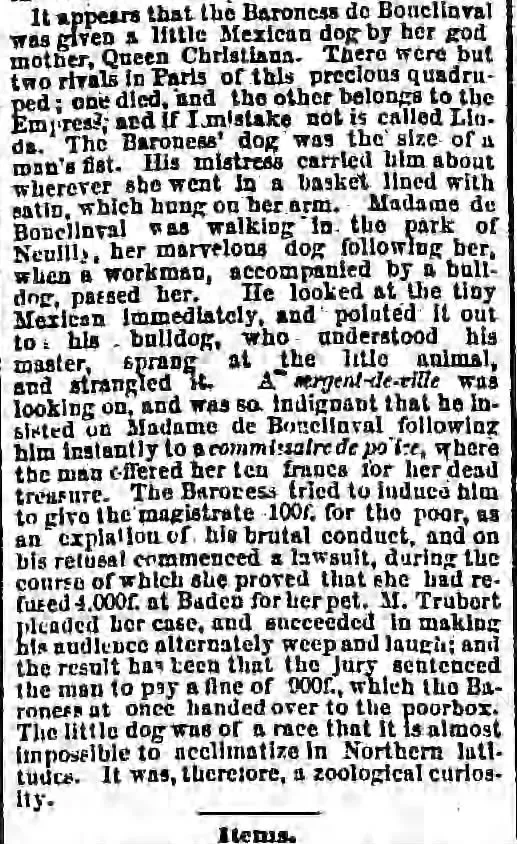
"The Baroness de Bonclinval was given a little Mexican dog by her god mother, Queen Christianna. There were but two rivals in Paris of this precious quadruped; one died, and the other belongs to the Empress... The Baroness' dog was the size of a man's fist. His mistress carried him about wherever she went in a basket lined with satin, which hung on her arm... The little dog was of a race that it is almost impossible to acclimate in Northern latitudes. It was, therefore, a zoological curiosity."
— Chicago Tribune, January 27, 1867
In 1867 Paris, there were only two such dogs in the entire city — one belonging to a baroness who received hers from a queen, and one belonging to the Empress. This is not the profile of a dog being imported by the crate-load from Mexican markets. This is a dog so rare and precious in European high society that having one was the equivalent of owning a crown jewel.
The key detail: these dogs were already circulating within European aristocracy, passed between queens and empresses, before the American border trade had even developed into a recognizable industry.
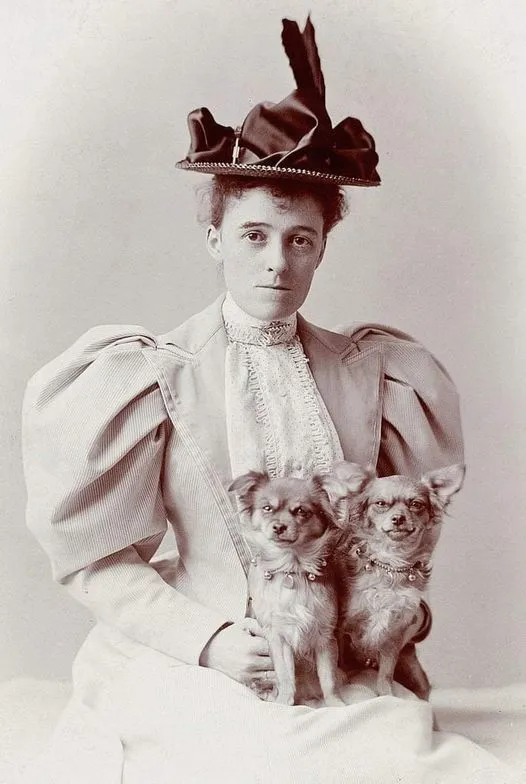
Sarah Bernhardt: The World's Most Famous Dog Owner
"She is always interested in the book of the day. She has a couple of dogs, Chihuahua dogs, which always go with her."
— Birmingham Evening Mail, February 22, 1889 (reporting on Sarah Bernhardt's American tour)
By 1889, the world's most celebrated actress — Sarah Bernhardt, a French icon famous across Europe and America — was touring with Chihuahuas as her constant companions. This was reported in the British press as a known fact, not as an unusual detail requiring explanation. Chihuahuas were already established enough in European cultural life that a Paris-based actress carrying them on tour required no introduction.
The 1880s American West: A Thriving Trade Already Established
"FOR SALE — Genuine Chihuahua Dogs. I have a few choice Chihuahua dogs at prices from $15 to $50 each. For particulars address F. E. FRENCH, El Paso, Texas, or Paso del Norte, Mexico, care Wells, Fargo & Co."
— Boston Globe, October 8, 1883
"A Deming man is the possessor of a Chihuahua dog which is nine months old and weighs only three-quarters of a pound."
— Las Vegas Gazette, New Mexico, March 22, 1884
"...a rare and valuable breed of black and tan, called the Chihuahua dog, is bred here. They are exceedingly small, running from one to four pounds in weight, and are beautiful, slender, and graceful as a deerhound, and have the peculiarity of a soft spot on the top of the head, not covered by the skull bones, where the pulsation can be plainly felt. They are very bright, quick, and intelligent."
— Chicago Tribune, December 22, 1883 (dispatch from Mexico)
"The Chihuahua Chiquita Dog — A Beautiful Creature. Every Mexican owns at least one Chihuahua chiquita dog. They are beautiful little creatures and of two varieties — one with long, silky hair, the other with a short smooth coat that is soft as velvet to the touch."
— Jackson Citizen Patriot, Jackson, MI, January 28, 1886 / Manchester Evening News, January 30, 1886
Note that this same article appeared almost simultaneously in a Michigan newspaper and a Manchester, England newspaper in January 1886. The two-coat variety system — long and smooth — was already documented and being reported to audiences on both sides of the Atlantic as established knowledge.
Britain Describes the Breed Standard — Before the AKC Existed
"The true Chihuahua dog is very small, has smooth hair of different colours (these must not include black) large prominent eyes, slender feet with long thin claws and a curious, small, round depression in the skull. It is very difficult to get one of the best."
— The Cornishman, Cornwall, England, July 4, 1895
In 1895, a Cornish newspaper described a recognizable Chihuahua breed standard — including the molera — as established knowledge for British readers. The AKC would not recognize the breed until 1904. British fanciers were already articulating what constituted a "true Chihuahua" nearly a decade before formal recognition in America.
Mrs. Hearst's Preciosa — The Chihuahua in Washington's Elite
"Mrs. Hearst has among her most cherished possessions in her Washington home a Chihuahua dog... Mrs. Hearst calls her pet Preciosa, and such of her visitors who speak Spanish find the little animal will cuddle up to them very snugly, with an almost human expression in its eyes, when it hears the words of endearment to which it listened in its first home said again in the familiar tongue."
— Evening Star, Washington DC, February 29, 1896
This detail — that Preciosa responded specifically to Spanish — suggests the dog came from a Spanish-speaking household. Combined with the 1882 Chicago Tribune article describing a Chihuahua that "had evidently belonged to and been the pet of some Spanish lady," a pattern emerges: these dogs moved through Spanish-speaking aristocratic networks, not through random border transactions.
Paris Calls It the "Butterfly Dog"
"A dainty, delicate, consumptive-looking dog is occasionally seen and appears to belong to a variety but little known. This is the Chihuahua dog, from Mexico, called in Paris the 'butterfly dog,' owing to the fantastic resemblance which its huge upright ears bear to the wings of the brilliant-hued insect."
The nickname "butterfly dog" — chien papillon — given to the Chihuahua in Paris, is telling. The Papillon (literally "butterfly") is a European breed with documented history going back to the 16th century, appearing in the paintings of Rubens, Rembrandt, and Van Dyck. The Parisian instinct to connect the Chihuahua to the Papillon by ear shape was not coincidental — it reflected an observed resemblance rooted in shared ancestry.
Part III: Hamilton Raynor — The Man Who Built the American Breed
No figure is more important to understanding the American Chihuahua than Hamilton Raynor, Depot Master of the G.H. (Galveston, Harrisburg and San Antonio) railway in El Paso, Texas. While history textbooks mention James Watson or Ida Garrett as early fanciers, Raynor's story — documented across dozens of newspaper articles spanning decades — reveals him as arguably the most significant figure in establishing the breed as a recognized, bred-to-standard dog in the United States.
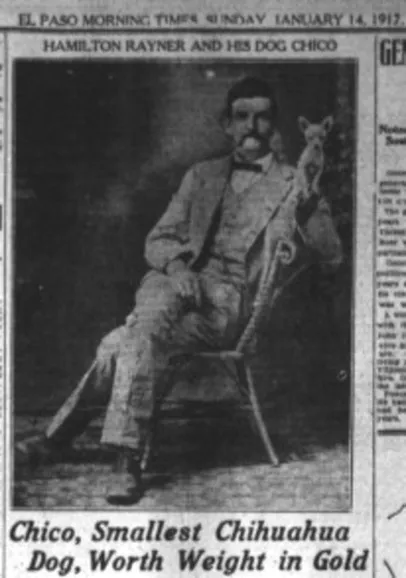
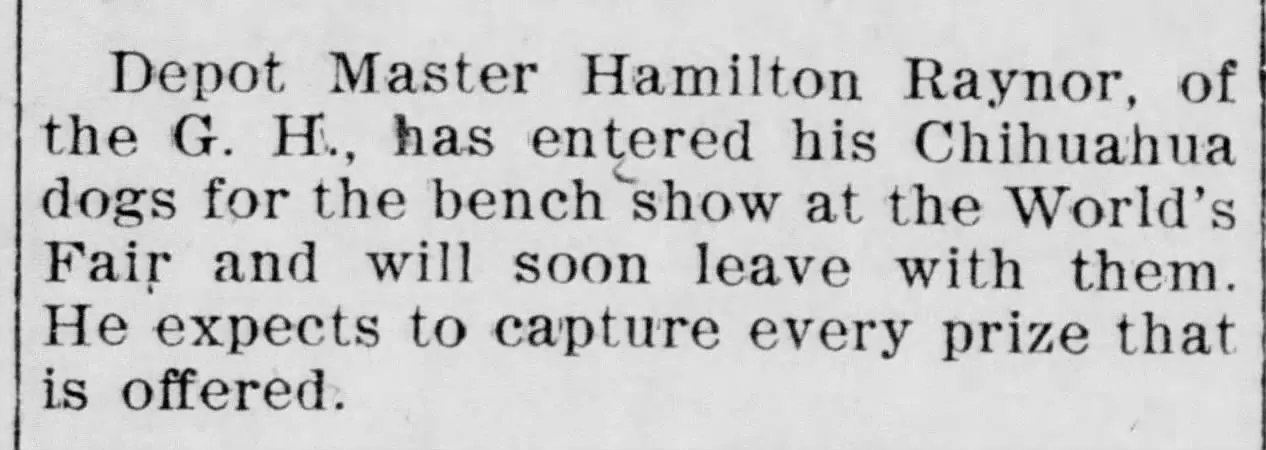
"RAILROAD MAGNATE BUYS A PAIR OF CHIHUAHUA DOGS. Stuyvesant Fish, president of the Illinois Central railway, accompanied by a party of friends, including a number of the Vanderbilt family... bought a couple of Chihuahua dogs from Hamilton Raynor, special officer of the G.H., paying $125 for the pair."
— El Paso Herald, October 15, 1903
"Hamilton Rayner, the proprietor of the only Chihuahua dog kennel in the United States, claims that his dogs are different and as such should be protected in the new tariff bill... He has shipped some of the little fellows to Europe and other foreign parts. His only competition is the Chihuahua dogs raised in Mexico and brought to El Paso to be sold."
— Tariff for Chihuahua Dogs, El Paso newspaper, c. 1909
Raynor explicitly distinguished between his carefully bred dogs and the animals sold in Mexican markets. He sought tariff protection for his industry against Mexican imports — clearly distinguishing between two different products sharing the same name. He described having raised Chihuahuas for nearly fifteen years and having sold dogs to Princess Marguerite Mansfield (niece of Emperor Franz Joseph of Austria-Hungary), railroad magnates, and American millionaires including Vanderbilt associates. He entered the 1904 St. Louis World's Fair bench show and won four prizes.

"A new use has just been found for Hamilton Raynor's Chihuahua dogs. This morning Mr. Raynor shipped one to San Francisco, where it will be used for scientific purposes. It is generally believed that the Chihuahua dog possesses a power for curing rheumatism."
— El Paso newspaper, c. 1905
Even before AKC recognition in 1904, Raynor had established what he called "the only Chihuahua dog kennel in the United States" — a formal breeding operation with documented sales to European royalty and American high society. The dog he was breeding was not a random border dog. It was a specifically bred animal with recognizable type that he had spent over a decade refining.
Chihuahua dog Chadro — "Imported from Mexico by R. Rentoul Symon, Esq." This British import demonstrates the transatlantic movement of the breed in the early 1900s.
Part IV: What the Early Show World Already Knew
By 1907, breed writers were already wrestling with the tension between the popular Aztec origin story and what they were actually observing in the field. Charles G. Hopton's comprehensive article "The Chihuahua," published in 1907, is remarkably candid:
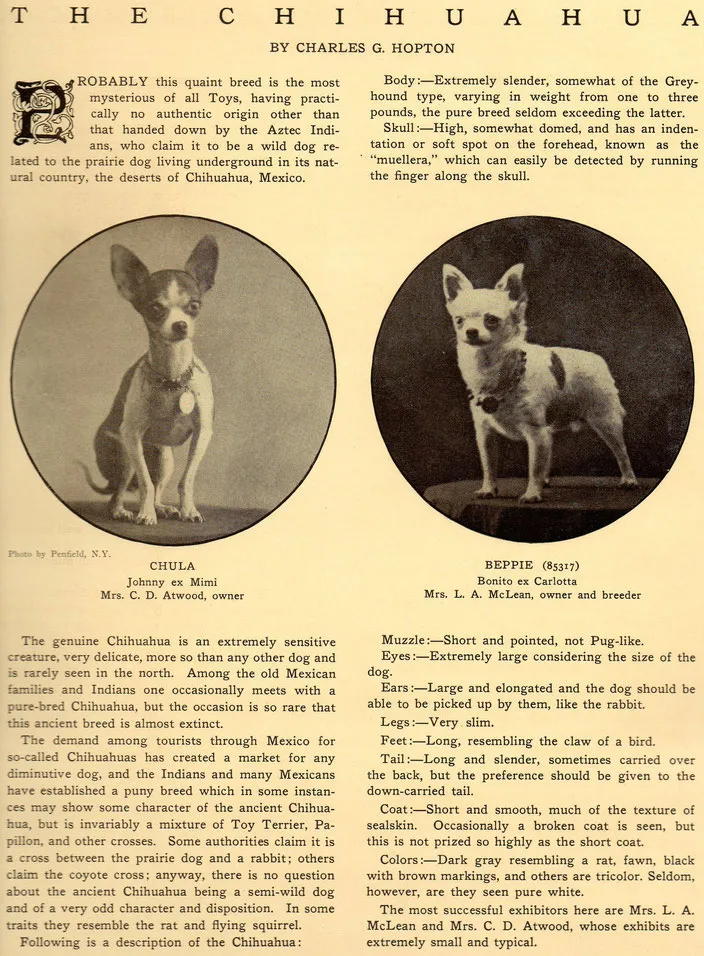
"PROBABLY this quaint breed is the most mysterious of all Toys, having practically no authentic origin other than that handed down by the Aztec Indians... Among the old Mexican families and Indians one occasionally meets with a pure-bred Chihuahua, but the occasion is so rare that this ancient breed is almost extinct. The demand among tourists through Mexico for so-called Chihuahuas has created a market for any diminutive dog, and the Indians and many Mexicans have established a puny breed which in some instances may show some character of the ancient Chihuahua, but is invariably a mixture of Toy Terrier, Papillon, and other crosses."
— Charles G. Hopton, "The Chihuahua," 1907
Read that carefully. In 1907 — the year the Chihuahua Club of America was founded — one of the breed's most respected early writers was already stating that the dogs being sold to tourists in Mexico were crosses of Toy Terrier, Papillon, and others. The "pure-bred Chihuahua" was described as nearly extinct even then among old Mexican families. What the tourists were buying was not the breed. The real breed was something else — something being preserved and bred by people like Raynor, and something whose true origin was already acknowledged as mysterious.
"Chihuahua Dog at Westminster: In the miscellaneous classes all sorts of dogs will be seen, including whippets, schipperkes, Maltese terriers, Chihuahua dogs, Chow Chows, mallamonts and retrievers."
— New York Tribune, February 18, 1901
Chihuahuas were being shown at Westminster Kennel Club three years before AKC recognition — grouped alongside Maltese and Schipperkes in the miscellaneous classes. The company they kept tells its own story: these were European and Mediterranean toy breeds. Not Mexican working dogs.
Part V: The DNA Evidence — The Numbers Don't Lie
Modern genetics has given us a tool that no amount of storytelling can override: mitochondrial DNA haplogroup analysis. This traces the maternal lineage of a dog population through geographic signatures accumulated over thousands of years. Every dog carries a genetic passport from its ancestors, and that passport tells us where those ancestors actually lived.
The 2013 Savolainen Study: Sample Contamination Exposed
The 2013 study (Savolainen et al., Proceedings of the Royal Society B) is the foundation of the "70% pre-Columbian Mexican ancestry" claim repeated across breed websites and popular articles. The study tested only 14 Chihuahuas and found that 5 of them (36%) carried haplogroup A185, which also appeared in one ancient Mexican burial sample. From this, researchers concluded that modern Chihuahuas descended directly from pre-Columbian Mexican dogs.
The A185 Problem: It Doesn't Exist in Verified Purebreds
Analysis of over 100 verified purebred Chihuahuas with documented pedigrees in the BreedGuru™ proprietary dataset has found ZERO instances of haplogroup A185. Not one. When a haplogroup that supposedly represents 36% of the breed does not appear at all in a sample seven times larger consisting of verified purebreds, the conclusion is unavoidable: the 2013 study used dogs of questionable purity — likely street dogs, pet store dogs, or backyard-bred mixed breeds labeled "Chihuahua" without pedigree documentation.
The Ancient Mexican Dogs Came From Asia
But the problems run deeper. The 2013 Savolainen study's own data reveals something the popular press coverage completely missed:
"All ancient American sequences except one... can now be linked to haplotypes present in East Asia or Siberia."
— Savolainen et al., 2013
The ancient Mexican burial dogs themselves came from Asia via the Bering Strait with early human migrants 10,000+ years ago. The study found haplogroup C16 (in ancient Mexican samples) was "found only among Siberian dogs" in the Old World. Haplogroup A29 was found "only in Siberia, East Asia and Oceania."
The ancient dogs buried in Mexico were Asian-origin dogs that arrived in the Americas with human migrations from Siberia. They are no more "native to Mexico" than humans are native to Mexico — both populations ultimately trace back to Asia.
Shared ancestry ≠ descended from. When a genetic marker appears in ancient Mexican burials, modern Asian breeds (Pugs, Chow Chows, Siberian dogs), and modern Chihuahuas (in contaminated samples only), this does NOT prove Chihuahuas descended from the Mexican burial. It proves they all share a common ancient Asian ancestor that diverged into separate lineages — one that crossed the Bering Strait to Mexico, one that remained in Asia, and one that migrated westward into Europe and the Mediterranean.
BreedGuru™ Proprietary Dataset (n=100+): What Verified Purebreds Actually Show
Analysis of over 100 verified purebred Chihuahuas with documented pedigrees reveals haplogroup patterns that tell a completely different story from the 2013 study. The BreedGuru™ system is a proprietary breeder tool with generative AI incorporated, currently in private use and coming to the public in the coming years.
| Haplogroup | % of Dogs | Geographic Origin |
|---|---|---|
| A1d | 43.3% | West Eurasian / European |
| A1a | 21.7% | West Eurasian / European |
| B1 | 18.3% | West Eurasian / European |
| C2 | 10.0% | Specifically European — ancient Neolithic European lineage (Duleba 2015, 12,500+ years old, Germany) |
| A1b | 5.0% | European-specific sublineages |
| A1e | 1.7% | West Eurasian |
| A185 | 0.0% | "Mexican origin" marker from 2013 study — NOT FOUND in verified purebreds |
Paternal haplogroups: 100% A1a — West Eurasian/European.
A185 instances: ZERO. The "Mexican origin" haplogroup does not exist in verified purebred populations.
Zero pre-Columbian American haplogroups. Zero East Asian haplogroups. Every tested maternal and paternal line traces to European or West Eurasian origins.
The C2 haplogroup is particularly significant. Research by Duleba et al. (2015) established that C2a2 and C2a3 are specifically European sub-lineages. Ancient dogs from Neolithic Germany — over 12,500 years old — belong to haplogroup C. A thread runs from those ancient European dogs directly to 10% of modern Chihuahuas tested in this dataset. That is not a Mexican origin story. That is a European one.
No Genetic Connection to Mexican Hairless Dogs (Xoloitzcuintli)
DNA analysis has confirmed that despite centuries of geographic overlap and the frequent confusion between Chihuahuas and Xolos in historical newspapers, there is no meaningful genetic relationship between the two breeds. If the Chihuahua had truly been present in Mexico for thousands of years alongside the Xolo, we would expect to see genetic evidence of interbreeding. We do not.
The Interbreeding Problem
Wild and feral dogs interbreed freely when they share territory. If small Chihuahua-type dogs had lived wild in the Mexican deserts for centuries — as the rabbit-hole myth suggests — and Xolos, village dogs, and other canines were also present, genetic mixing would have been inevitable. Yet the DNA shows clean separation: Chihuahuas carry ancient European lineages with zero trace of the pre-Columbian American or East Asian signatures we see in Xolos and other indigenous American breeds. This is only possible if the Chihuahua was not present in the Americas until European contact brought them.
If the Chihuahua descended primarily from Mexican Techichi dogs, we would expect to see pre-Columbian American and East Asian haplogroups, genetic overlap with Xolos, and evidence of interbreeding with local Mexican dogs. Instead, we find ancient European lineages reaching back to Neolithic Germany, complete genetic separation from indigenous American breeds, and a clean maternal line tracing to the Mediterranean world. The DNA agrees with the paintings, the newspapers, and the aristocratic European connection: this breed's deep ancestry is European, not American.
Part VI: How the Mexico Story Became the Only Story
None of this means that Chihuahua, Mexico played no role in the breed's history. The state of Chihuahua was a real crossroads where dogs — including small companion dogs of various ancestries — were traded, sold to tourists, and given the name of the region. The border trade was real. Hamilton Raynor himself was based in El Paso and obtained some of his breeding stock from Mexico.
But there is a critical difference between "dogs were traded through Chihuahua, Mexico" and "the breed originated in Chihuahua, Mexico." The newspaper evidence makes clear that by the 1880s, there were already two distinct things sharing the same name: the carefully bred type being developed by people like Raynor and sold to European royalty, and the market dogs being sold to tourists in Mexican plazas that Hopton himself described as Toy Terrier crosses.
The AKC recognition in 1904 — which used the name of the Mexican state — effectively froze the origin story in place. Once the official story became "Mexican breed, named for the state," it was repeated in every subsequent breed book, and the evidence pointing elsewhere was gradually forgotten.
The 2020 DNA study was not forgotten by scientists. They published what they found.
A Theory Consistent with the Evidence
The picture that emerges from the combined evidence — art history, newspaper archives, haplogroup analysis, and the 2020 Science study — is something like this:
Small companion dogs with apple heads, large ears, and fine bones existed in the Mediterranean and European world for centuries, possibly millennia. They appear in ancient Roman art, in Renaissance frescoes painted before Columbus sailed, and in the companion dog cultures of Malta and southern Europe. Spanish explorers and missionaries — who traveled with small companion dogs as was common among European aristocracy — brought these dogs to New Spain. Over time, these dogs became associated with the Mexican state of Chihuahua through the trade networks that developed there. By the mid-1800s, Americans were acquiring them along the border and calling them by the name of the region — just as you might call a wine by the name of the valley it came from, not the ancient vine it grew on.
The Aztec Techichi connection is not impossible — some interbreeding may have occurred over the centuries of colonial history. The 4% pre-colonial ancestry in the 2020 study suggests some, not none. But the primary genetic ancestry of the modern Chihuahua is European. The art history says so. The newspapers say so. The DNA says so.
Part VII: The Barnum Strategy — Marketing a Myth
P.T. Barnum famously said there's a sucker born every minute. What he actually understood was that people will pay a premium for a compelling story. The evidence suggests that Hamilton Raynor — and the broader Chihuahua industry of the late 1800s — understood this principle perfectly. The "ancient Mexican breed discovered in the deserts of Chihuahua" wasn't just a convenient origin story. It was a marketing strategy so successful that it became accepted fact for over a century.
The Business Model: Selling Dogs to Tourists
As early as 1883, American newspapers were openly describing the Chihuahua trade as a tourist scam business:
"For a man with limited capital know of no business that offers great inducements than getting a stock Chihuahua dogs and raising Chihuahua 'purps' to sell to tourists. It altogether in keeping with the Chihuahua style of doing business — small capital and big profits."
— Public Ledger, Philadelphia, May 4, 1883
This is not a description of legitimate livestock commerce. This is a description of a novelty gift business targeting travelers who wanted an exotic souvenir from their trip to the Southwest. The dogs weren't being sold to ranchers, breeders, or working dog handlers. They were being sold to tourists as curiosities.
Public Ledger, May 4, 1883 — "getting a stock Chihuahua dogs and raising Chihuahua 'purps' to sell to tourists... small capital and big profits."
The Newfoundland Puppy Scam of 1899
By 1899, the El Paso Herald was publishing stories about outright fraud in the border dog trade:
"He used to tell a good story on himself about selling a Chihuahua dog to a tourist. He had a little Newfoundland pup and sold it for a fancy price to a man who wanted to buy one of the famous Chihuahua dogs. The man took the dog east and it grew to be the size of a burro.
Months afterward he came to El Paso and upbraided Mike for deceiving him. Mike said: 'Faith, if you had kept that dog in Texas it would have been a Chihuahua dog, but I couldn't guarantee that it wouldn't grow any bigger, if you took it east.'
The tourist had to laugh and admit that the joke was on him."
— El Paso Herald, July 24, 1899
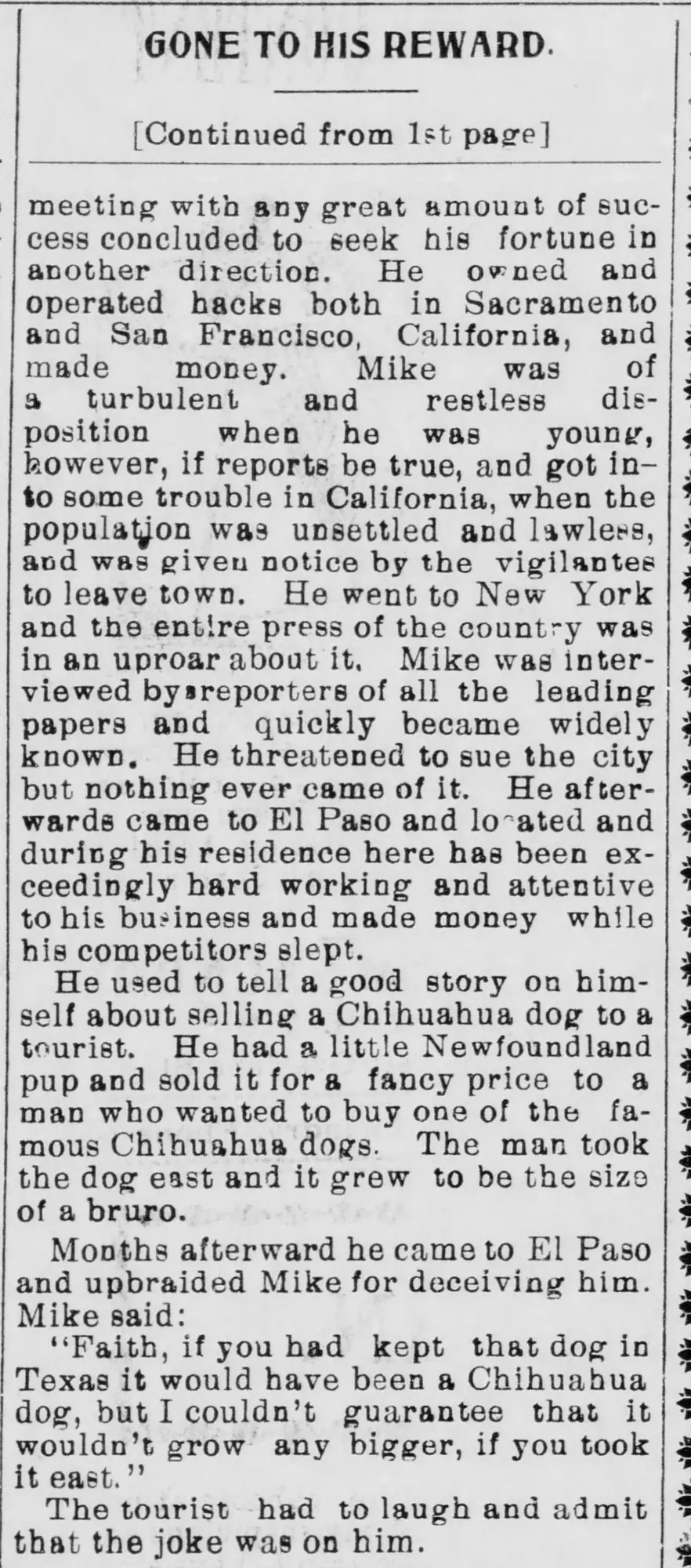
This story was printed in the local El Paso paper as humorous. It was not a scandal. It was an inside joke. The fact that a man could sell a Newfoundland puppy as a Chihuahua — and this was considered funny rather than criminal — tells you everything about what the "Chihuahua dog trade" actually was in the 1890s borderlands.
The Consul's Report: What the U.S. Government Found in Mexico
In September 1907, a reader from Bound Brook, New Jersey wrote to the El Paso Herald asking for help finding information about the Chihuahua breed:
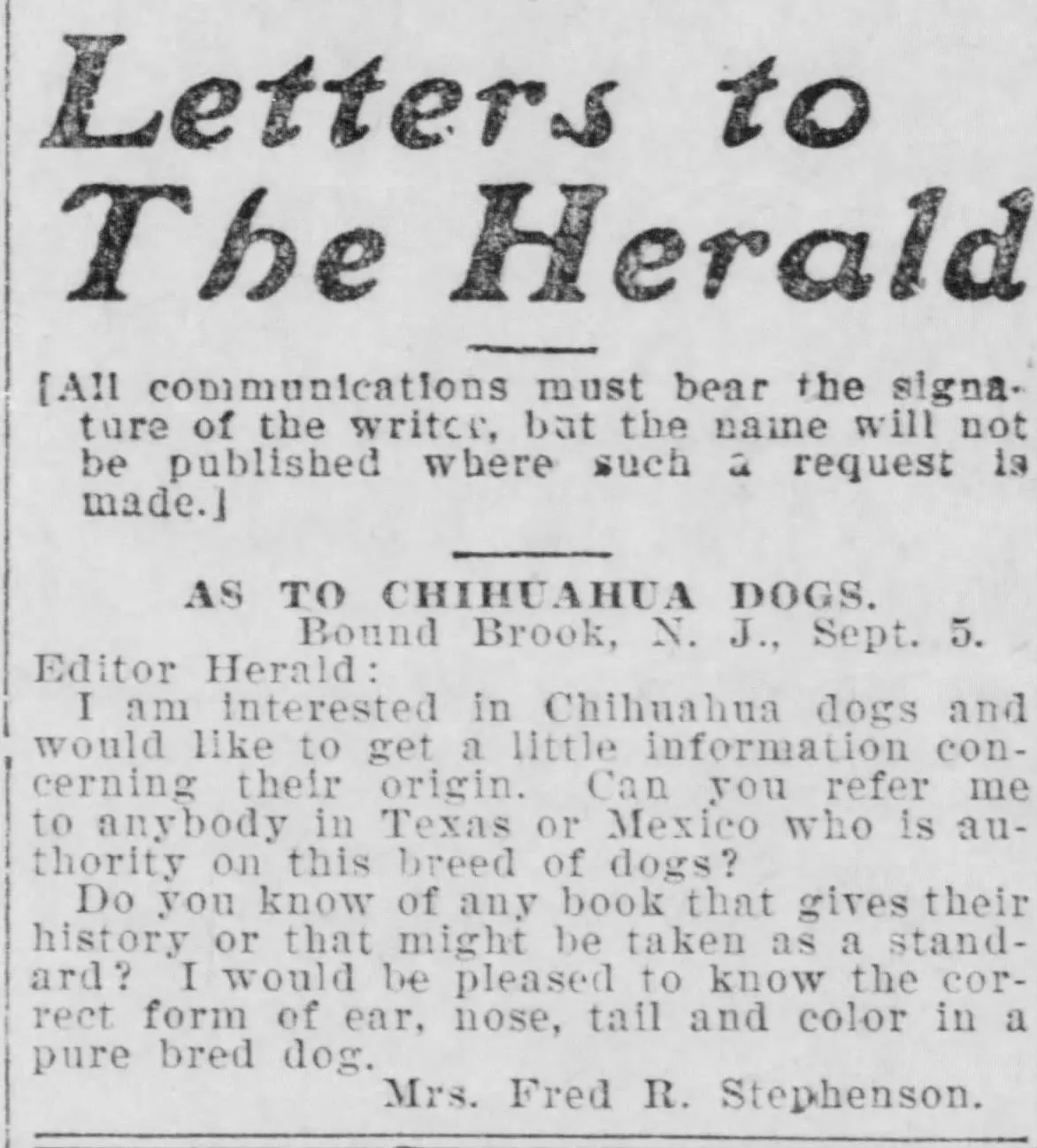
This letter was written in 1907 — three years after AKC recognition, a year after the Chihuahua Club of America was founded, and decades after the breed had supposedly been "discovered" in Mexico. If the origin story were true and well-documented, why was a prospective buyer writing to a Texas newspaper asking if anyone knew the breed's history?
The answer came in a remarkable article that appeared shortly afterward, sourced from the New York Mail and reporting on an official statement from the American consul general in Mexico City:
"The American consul general at the City of Mexico has sounded a note of more or less wild alarm. The Chihuahua dog, he says, is perishing from the earth. It has already become so scarce, in its true and undiluted form, that specimens are never sold for less than $300 Mexican. The world sadly faces the day when even Mr. Morgan could not purchase a Chihuahua dog, because there would not be found this side of that equal sky where the faithful dog, resurrected and glorified, is supposed to bear the hunter company."
— "Chihuahua Dogs," reprinted from the New York Mail (date unknown, c. 1907)
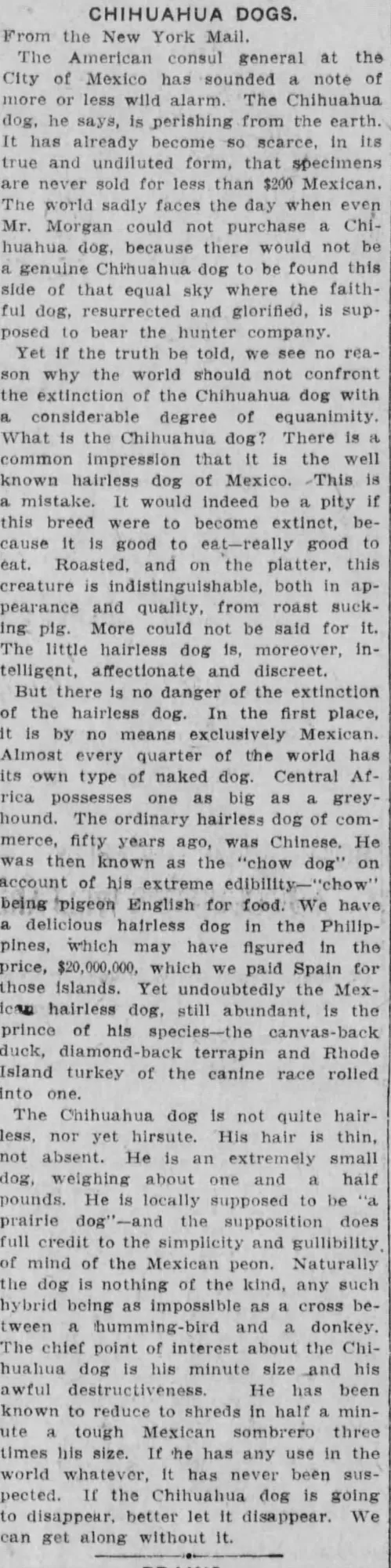
Read that again. The official U.S. diplomatic representative in Mexico City — the person with the best access to information about what actually existed in Mexico — reported that the Chihuahua dog was "perishing from the earth" in Mexico. It was so rare that even J.P. Morgan's money couldn't buy one there.
The article goes on to make an even more damning observation:
"There is a common impression that [the Chihuahua] is the well known hairless dog of Mexico. This is a mistake. It would indeed be a pity if this breed were to become extinct, because it is good to eat — really good to eat. Roasted, and on the platter, this creature is indistinguishable, both in appearance and taste, from roast suckling pig."
The article is confusing the Chihuahua with the Xoloitzcuintli (Mexican hairless dog). It then clarifies:
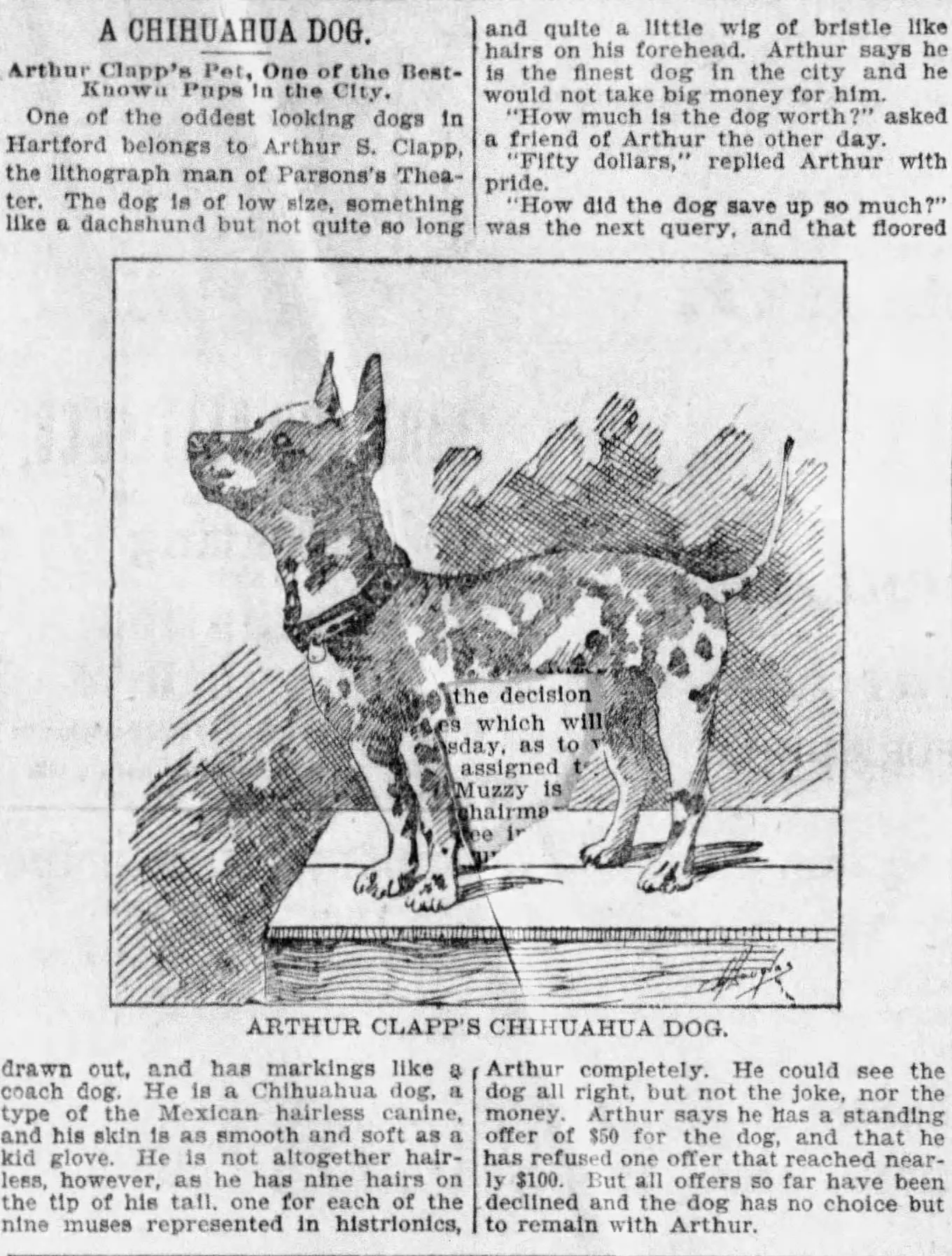
"There is no danger of the extinction of the hairless dog. In the first place, it is by no means exclusively Mexican. Almost every quarter of the world has its own type of naked dog. Central Africa possesses one as big as a greyhound. The ordinary hairless dog of commerce, fifty years ago, was Chinese."
And then comes the line that reveals what Mexican locals themselves thought about the supposed "ancient Chihuahua":
"He is locally supposed to be 'a prairie dog' — and the supposition does full credit to the simplicity and gullibility of mind of the Mexican peon."
Let that sink in. According to this article — which is reporting on official U.S. consular findings — the people in Mexico itself thought the "Chihuahua dog" was a prairie dog, and the writer considered this belief evidence of peasant gullibility. The dog supposedly native to Mexico was so unfamiliar to Mexicans that they confused it with a rodent.
What This Evidence Means
If the Chihuahua were truly an ancient Mexican breed, widely known and kept by Mexican families for centuries, we would expect:
- The U.S. consul in Mexico City to have no trouble finding them
- Mexican newspapers to mention them regularly
- Local Mexicans to know what they were, not confuse them with prairie dogs
- The border trade to involve legitimate livestock sales, not tourist novelty scams
- Prospective buyers in 1907 to know where to get accurate information about the breed
None of these things were true. The evidence points to a different reality: a small European companion dog was rebranded with an exotic backstory and sold to wealthy Americans and Europeans as a rare Mexican treasure. The marketing was so effective that it became the official origin story, repeated uncritically for over a century.
Raynor Wasn't a Fool — He Was a Genius
Hamilton Raynor understood something fundamental about human psychology: people will pay more for a story than for a dog. A "nice little English toy breed" might sell for $5. But an "ancient Aztec companion, nearly extinct, rescued from the deserts of Chihuahua where they live in rabbit holes" — that sells for $125 to a railroad magnate, $100 to a Chicago socialite on the Golden State Limited, and becomes a gift worthy of European royalty.
The biological reality — that a 1-2 lb dog cannot survive on milk alone, cannot whelp safely without human intervention, and certainly cannot live wild in desert rabbit holes — was irrelevant. The story was what mattered. And Raynor, who had livestock experience and certainly understood animal husbandry, knew exactly what he was selling: not just dogs, but mystique.
The genius of the Chihuahua origin myth is that it worked so well that even after the U.S. consul in Mexico reported the dog was "perishing from the earth" in Mexico itself — even after newspapers openly described the border trade as a tourist scam — the story stuck. It became the official AKC history. It went into every breed book. And it has been repeated as fact for 120 years. P.T. Barnum would have been proud.
Part VIII: A Gallery of History
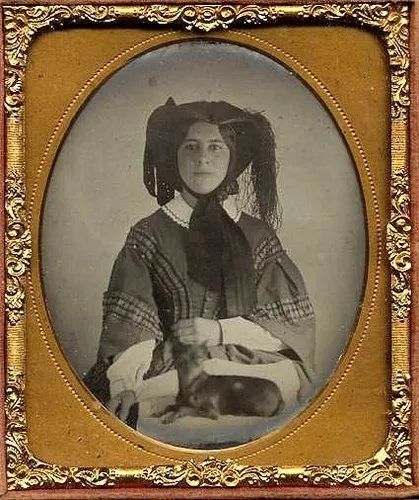
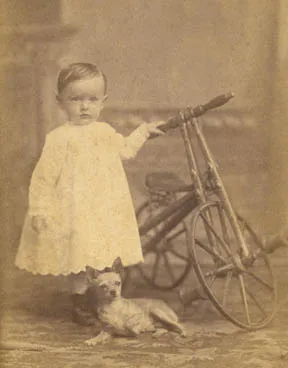
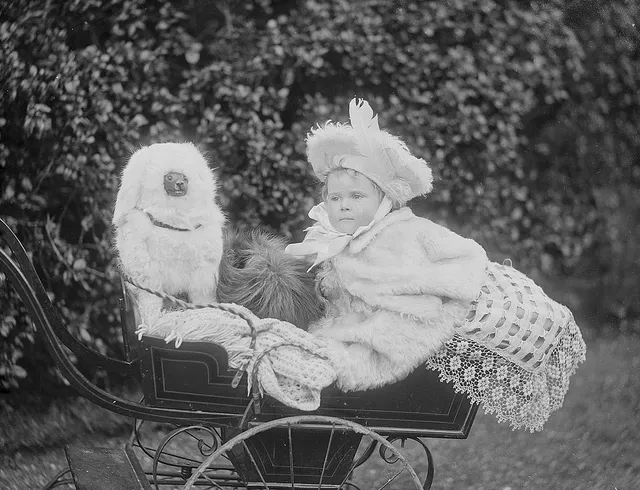
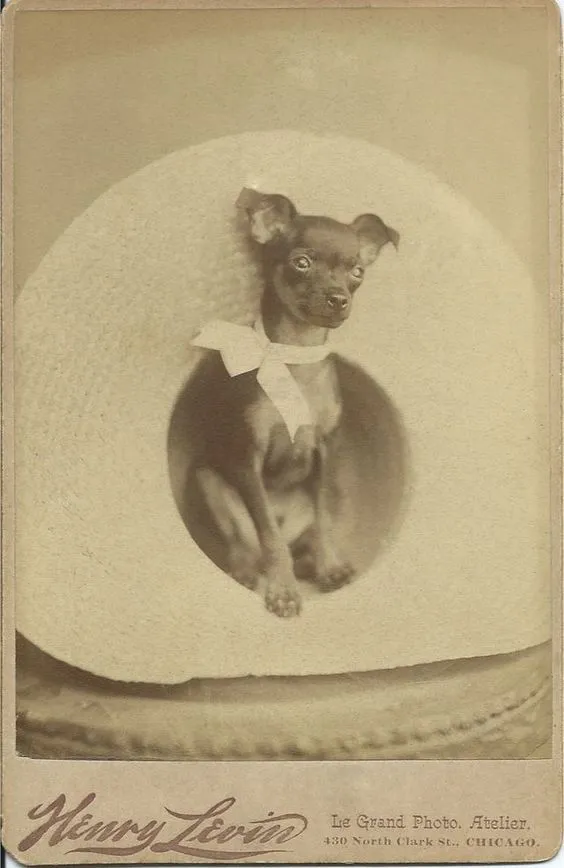
The following images from the historical record provide a visual timeline of the Chihuahua's documented history in the United States from the mid-1800s through the early 20th century.
What the Evidence Tells Us
- The breed predates Columbus in European art — Botticelli's 1482 Sistine Chapel fresco shows a small dog of this type a full decade before Columbus reached the Americas
- Ancient Roman connections exist — a recently discovered Pompeii fresco (79 AD) depicts a small companion dog consistent with the Chihuahua type
- European aristocracy knew this dog before the American border trade — in 1867 Paris, only two such dogs existed in the entire city, passed between queens and empresses
- The newspaper record stretches back to 1860 — the breed was already named and familiar in American cities before the modern "discovery in Mexico" narrative begins
- The "Mexican origin" haplogroup doesn't exist in verified purebreds — the 2013 study found haplogroup A185 in 36% of 14 Chihuahuas; analysis of 100+ verified purebreds found ZERO instances of A185, proving the study used contaminated samples
- The ancient Mexican burial dogs came from Asia — the 2013 study's own data shows ancient Mexican dogs carried haplogroups "found only in Siberia, East Asia and Oceania," proving they arrived via the Bering Strait with human migrants, not that they originated in Mexico
- 100% European/West Eurasian haplogroups in verified purebreds — including the ancient C2 haplogroup tracing to Neolithic European dogs over 12,500 years old; zero pre-Columbian American, zero East Asian
- DNA shows no genetic relationship to Xoloitzcuintli — despite centuries of alleged geographic overlap, there is zero genetic evidence of interbreeding between Chihuahuas and Mexican hairless dogs
- Wild dogs interbreed — but these didn't — if Chihuahuas had been present in Mexico for centuries, genetic mixing with local dogs would be inevitable. The clean European lineage proves they were not there until European contact
- The U.S. Consul General in Mexico City reported the dog was "perishing from the earth" in Mexico — the official U.S. diplomatic representative couldn't find them there
- The border trade was openly described as a tourist scam — newspapers in 1883 called it a business based on "small capital and big profits"; in 1899 the El Paso Herald published a story about a man selling a Newfoundland puppy as a Chihuahua
- Mexicans themselves didn't recognize the dog — contemporary sources reported Mexican locals thought "Chihuahuas" were prairie dogs
- Early show world writers already knew the market dogs were crosses — Hopton (1907) explicitly identified tourist-trade "Chihuahuas" as Toy Terrier and Papillon crosses
- Hamilton Raynor's kennel was the commercial foundation — he ran the only dedicated Chihuahua kennel in the US for 15+ years, selling to European royalty and American millionaires, and distinguished his breeding stock from Mexican market dogs
- The origin story was a marketing strategy — the evidence suggests the "ancient Aztec breed discovered in Mexican deserts" narrative was created to sell European toy dogs at premium prices
- Both the myth and the truth deserve honor — the romantic story shaped the breed's identity, but the true lineage to Roman lap dogs and Mediterranean companion dogs is equally worthy of celebration
- The full story is still being written — this is an active area of historical and genetic research, and the evidence continues to accumulate
Honoring Both the Myth and the Truth
The story of the ancient Aztec companion dog, rescued from the deserts of Chihuahua, is undeniably charming. It has inspired countless breed enthusiasts, shaped the identity of the Chihuahua fancy, and given the breed an air of exotic mystery that has captivated dog lovers for over a century. There is value in that story. It has become part of the breed's cultural heritage, and we do not wish to diminish the genuine affection people feel for the romantic image of the tiny desert survivor.
But there is also profound value — and perhaps even greater charm — in honoring the true lineage of this remarkable little dog. The Chihuahua is not a New World primitive breed. It is a Mediterranean and European companion dog with roots reaching back thousands of years — to ancient Rome, to the Maltese pocket dogs, to the small lap dogs painted in Renaissance frescoes and carried by European queens. This is not a story of survival in harsh deserts. It is a story of human love, artistry, and the cultivation of beauty across millennia.
The DNA doesn't lie. The haplogroups trace to Neolithic Europe. The paintings predate Columbus. The newspapers document a European aristocratic network. The U.S. consul in Mexico City couldn't find the dog there. And the biological realities — that a 1-2 lb dog cannot survive alone, cannot whelp without help, and would naturally interbreed with local dogs if it had been present — all point in the same direction.
We believe both stories deserve to be told: the myth that shaped the breed's identity, and the truth that reveals its ancient and noble heritage. The Chihuahua is no less special for being European. If anything, the confirmed connection to Roman lap dogs, Maltese pocket dogs, and the companion animals of Renaissance nobility makes the breed's history richer, not poorer.
The myth gave us romance. The truth gives us lineage, continuity, and a documented heritage reaching back to antiquity. Both are worth honoring. And together, they tell the full story of how a tiny dog — loved by empresses, painted by masters, and carried across oceans — became the Chihuahua we know today.
This research is ongoing. The newspaper archive you have seen here represents only a fraction of the documented historical record. A comprehensive book examining the full evidence for European and Mediterranean origins — including hundreds of historical newspaper citations, art historical analysis, and modern genetic data — is currently in development. Do you have historical photographs, documents, or family records related to early Chihuahuas? We would love to hear from you.
References
Bergström, A., et al. (2020). Origins and genetic legacy of prehistoric dogs. Science, 370(6516), 557–564. [Note: Study reports shared ancestry with ancient American dogs but does not account for context of shared ancient Asian haplotypes across multiple modern breeds.]
Savolainen, P., et al. (2013). Pre-Columbian origins of Native American dog breeds, with only limited replacement by European dogs, confirmed by mtDNA analysis. Proceedings of the Royal Society B, 280(1142). [Note: Sample size n=14 Chihuahuas; reports haplotype A185 shared with ancient Mexican burial and modern Asian breeds; no pedigree verification documented.]
Duleba, A., et al. (2015). Complete mitochondrial genome database and standardized classification system for Canis lupus familiaris. Forensic Science International: Genetics, 16, 44–54.
Hopton, C.G. (1907). The Chihuahua. Published breed standard history and description.
Stringer, T.A. (Ongoing). BreedGuru™ Proprietary Master Dataset. A & A's Chihuahuas. All rights reserved.
Botticelli, S. (1481–1482). Events in the Life of Moses. Fresco, Sistine Chapel, Vatican City.
Evening Star, Washington DC, January 6, 1862. Lost dog advertisement — "Chihuahua DOG."
The Courier Journal, Louisville, KY, February 21, 1860. Lost dog advertisement — "Mexican dog."
Chicago Tribune, January 27, 1867. Report on Baroness de Bonclinval's dog in Paris.
Birmingham Evening Mail, February 22, 1889. M. Mayer's Reminiscences of Stars — Sarah Bernhardt and Chihuahua dogs.
The Cornishman, July 4, 1895. Description of the "true Chihuahua dog" for British readers.
Evening Star, Washington DC, February 29, 1896. Mrs. Hearst's Chihuahua, Preciosa.
El Paso Herald, October 15, 1903. Railroad magnate buys Chihuahua pair from Hamilton Raynor.
New York Tribune, February 18, 1901. Westminster Kennel Club show preview — Chihuahua in miscellaneous class.
El Paso Morning Times, January 14, 1917. Hamilton Rayner and his dog Chico.
El Paso Herald, July 24, 1899. Newfoundland puppy sold as Chihuahua — "the joke was on him."
El Paso Herald, September 10, 1907. Letter to the editor from Mrs. Fred R. Stephenson requesting information on Chihuahua origin.
Public Ledger, Philadelphia, May 4, 1883. Chihuahua dogs as tourist business — "small capital and big profits."
"Chihuahua Dogs," source: New York Mail (date unknown, c. 1907). Report on U.S. Consul General statement regarding Chihuahua scarcity in Mexico.
Additional newspaper sources: Boston Globe (1883), Chicago Tribune (1882, 1883, 1884), Las Vegas Gazette (1882, 1884), Austin American Statesman (1879), Manchester Evening News (1886), Jackson Citizen Patriot (1886), Galveston Daily News (1875), St. Louis Globe Democrat (1885).
Pompeii fresco (79 AD). Recently discovered baby and dog fresco, Pompeii archaeological site.
Malta postage stamp (2001). Kelb tal-But — Pocket Dog. Artist: Ludwig Flacik.
© 2026 A & A's Chihuahuas. All rights reserved.
Historical newspaper citations verified from archival records. This content may not be reproduced without permission.
A comprehensive book on Chihuahua origin history is in development. Inquiries welcome.