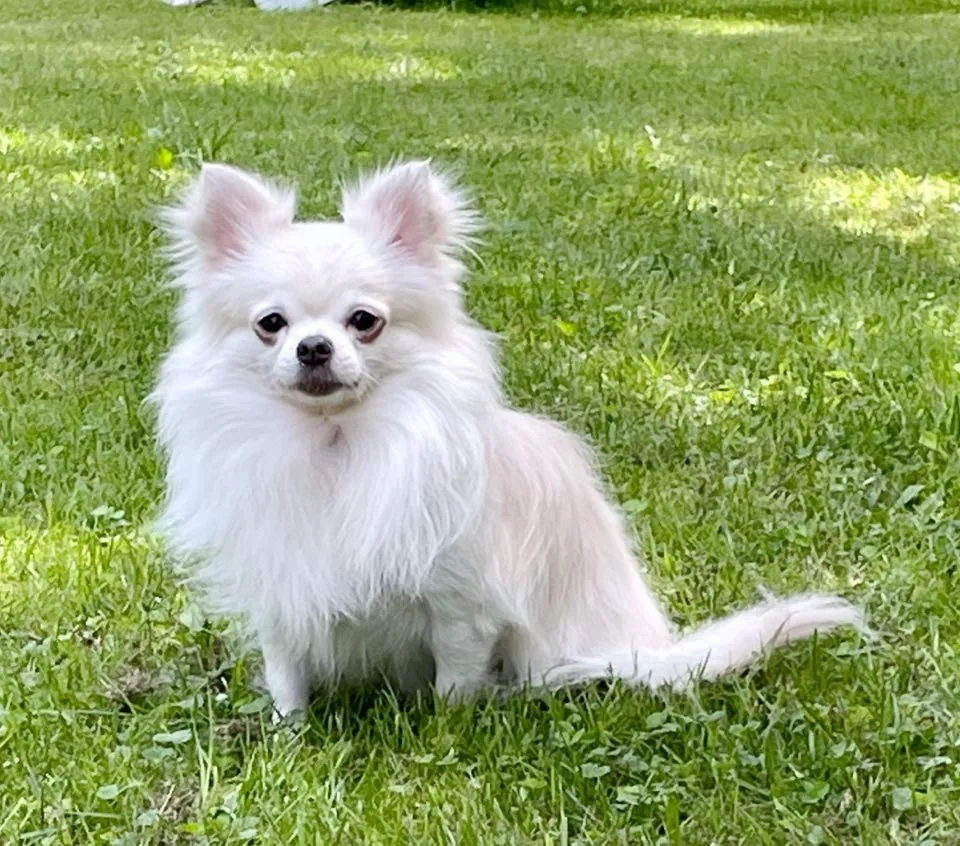
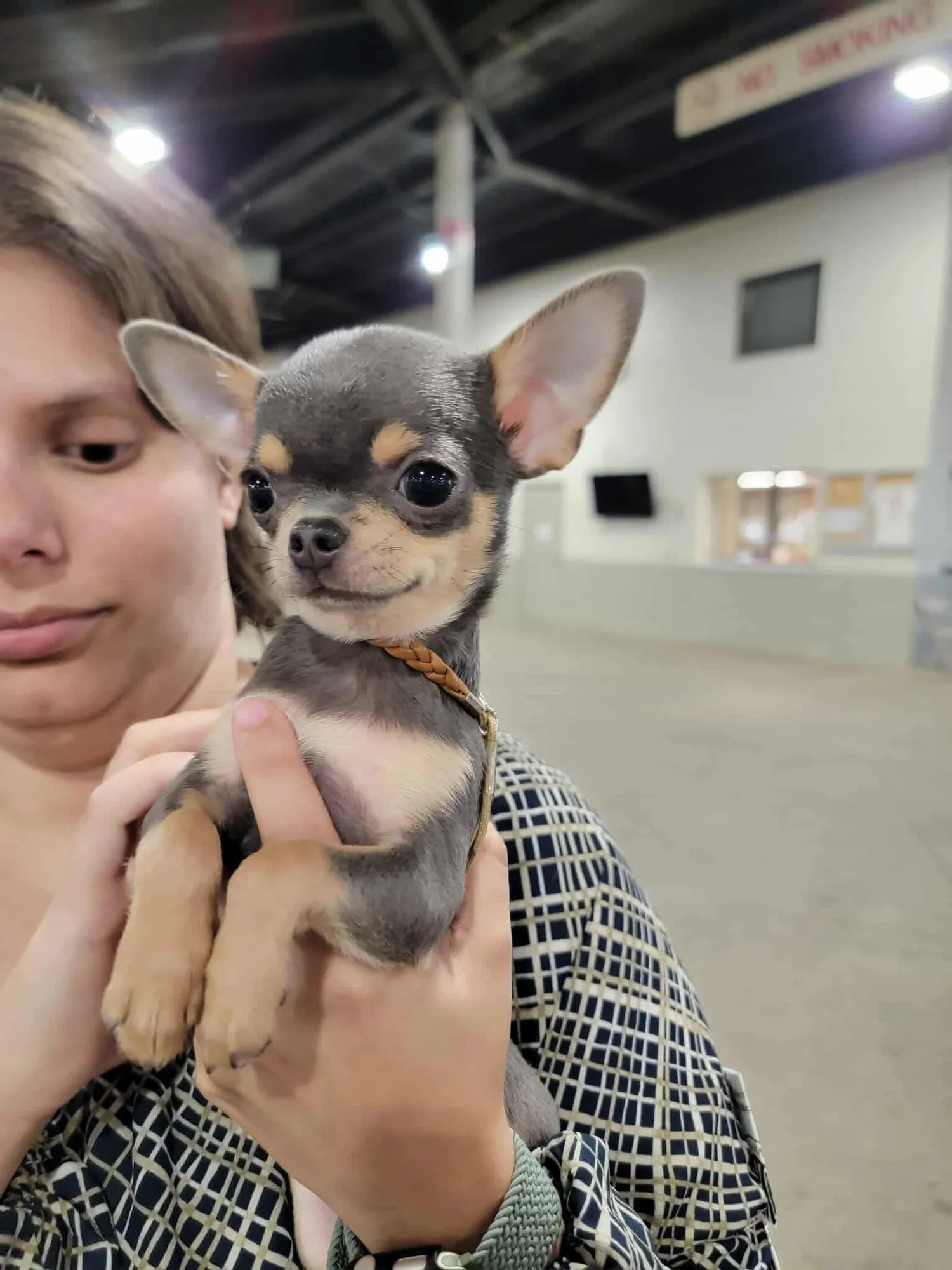
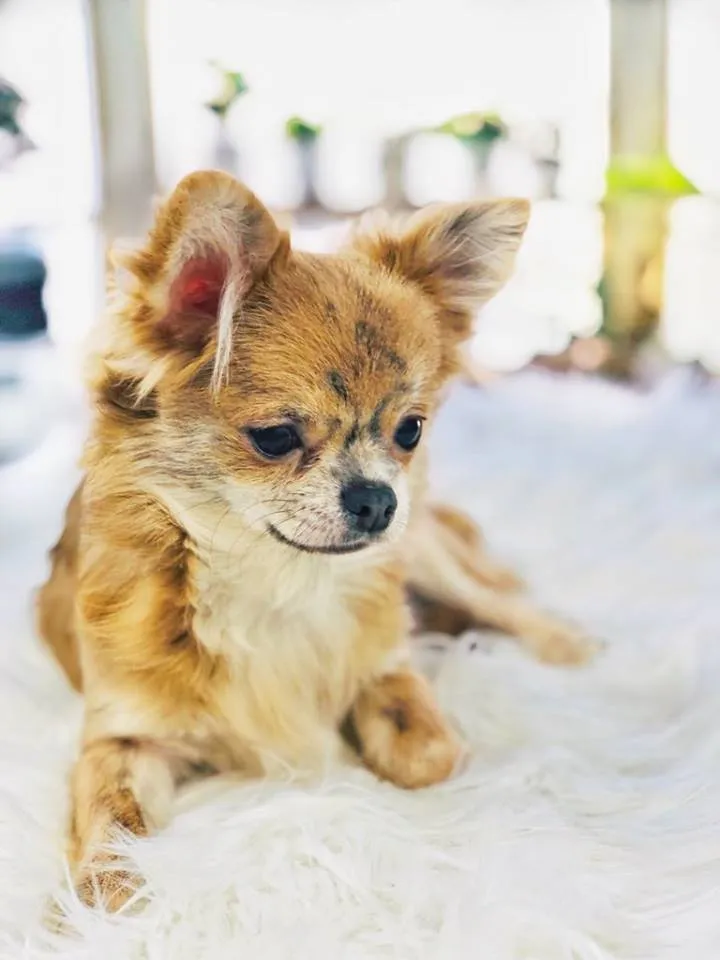
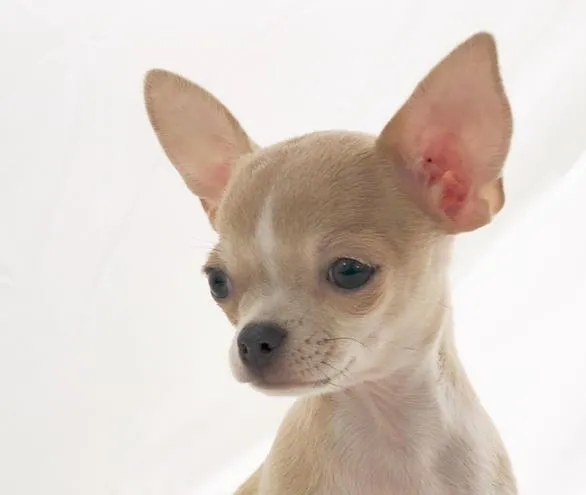
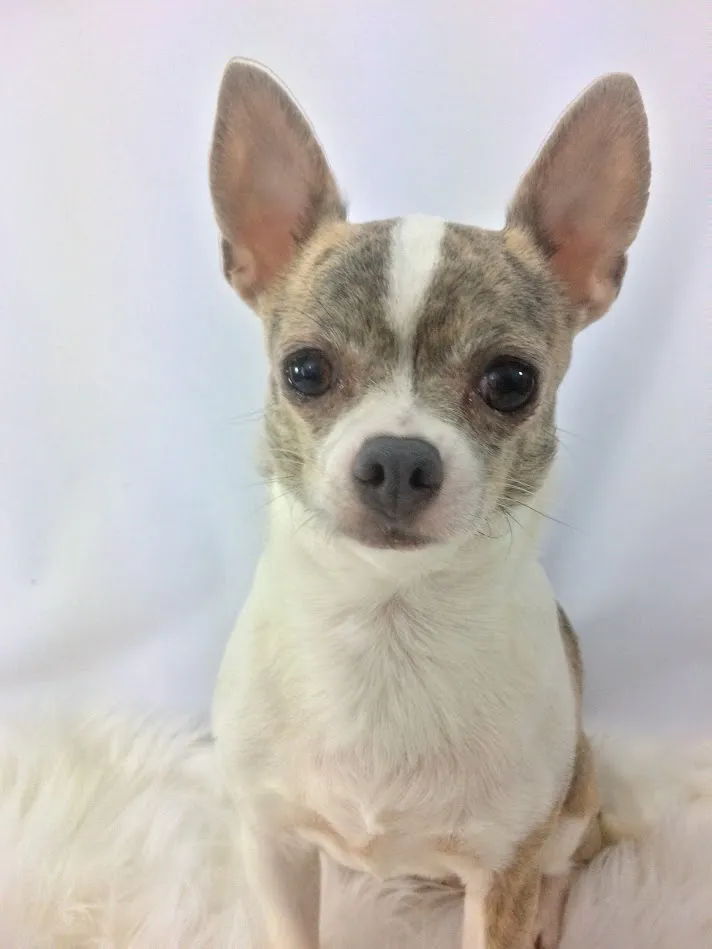
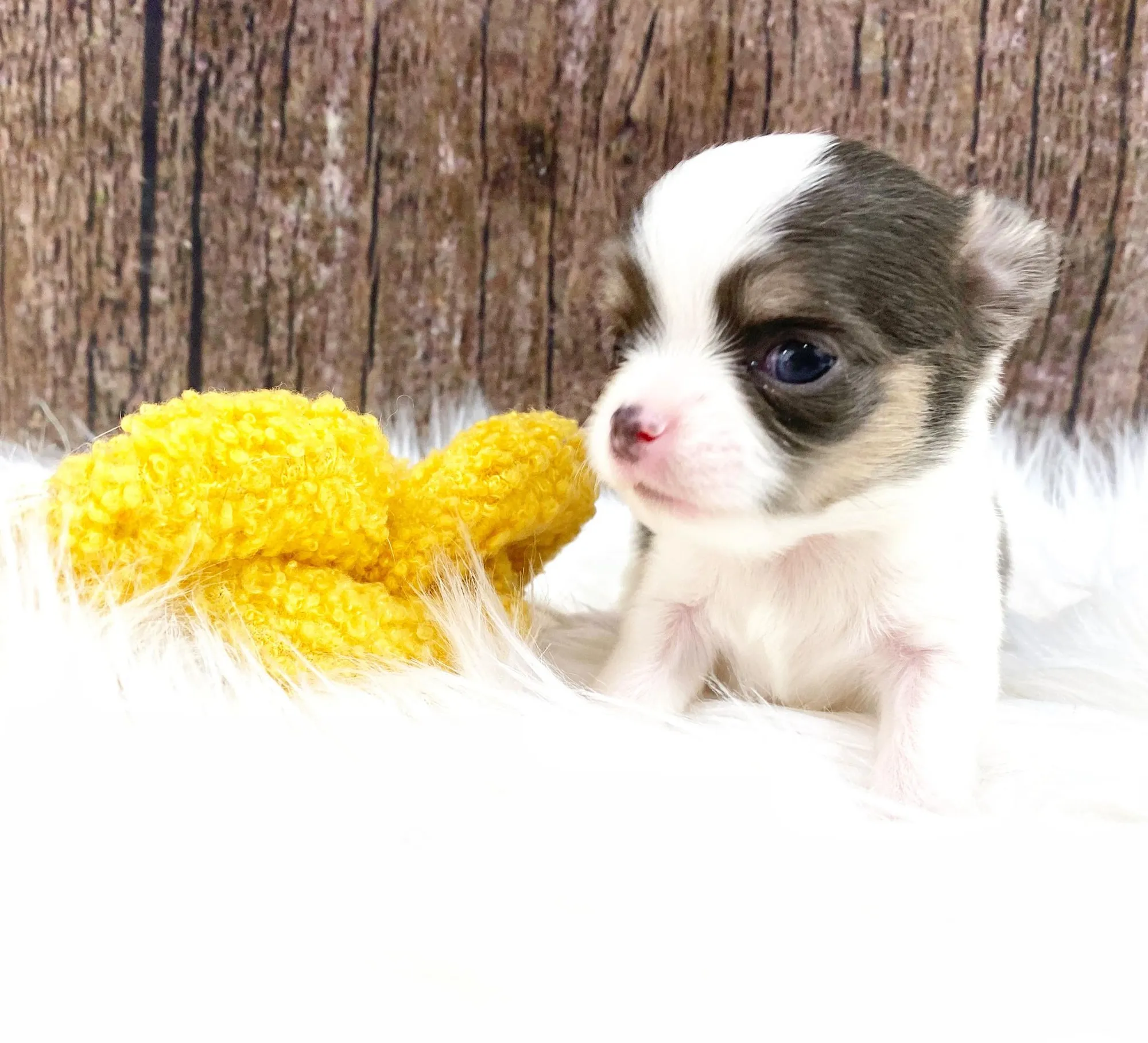
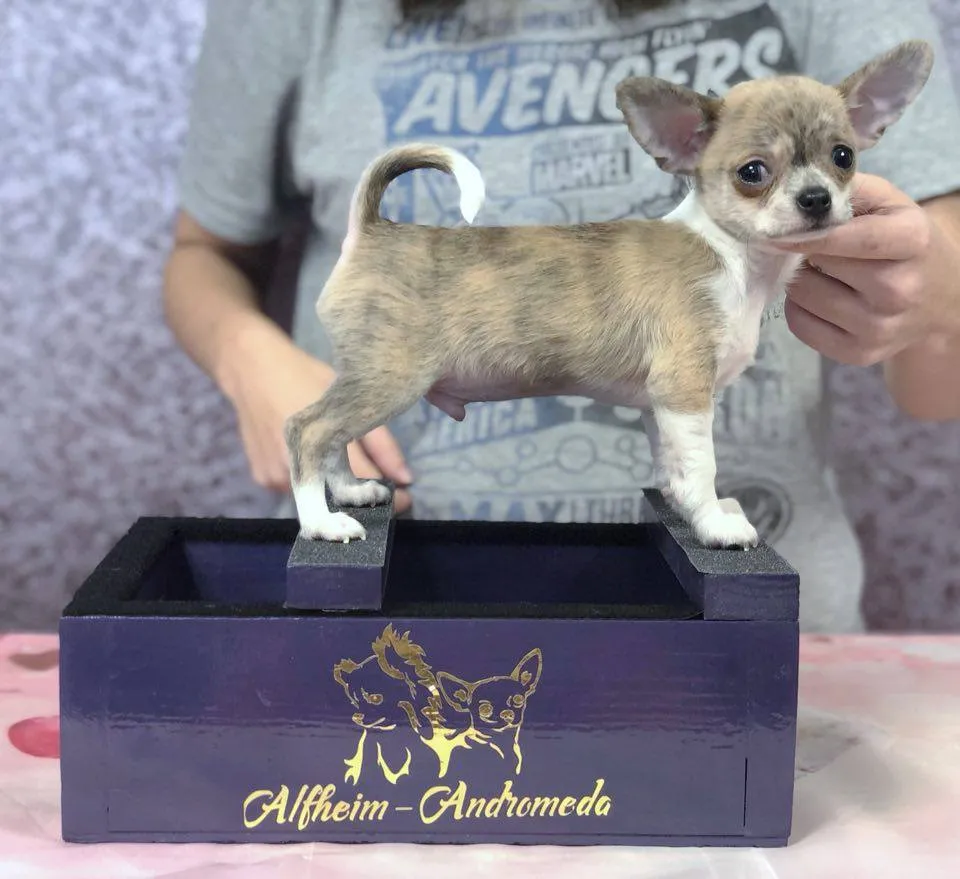
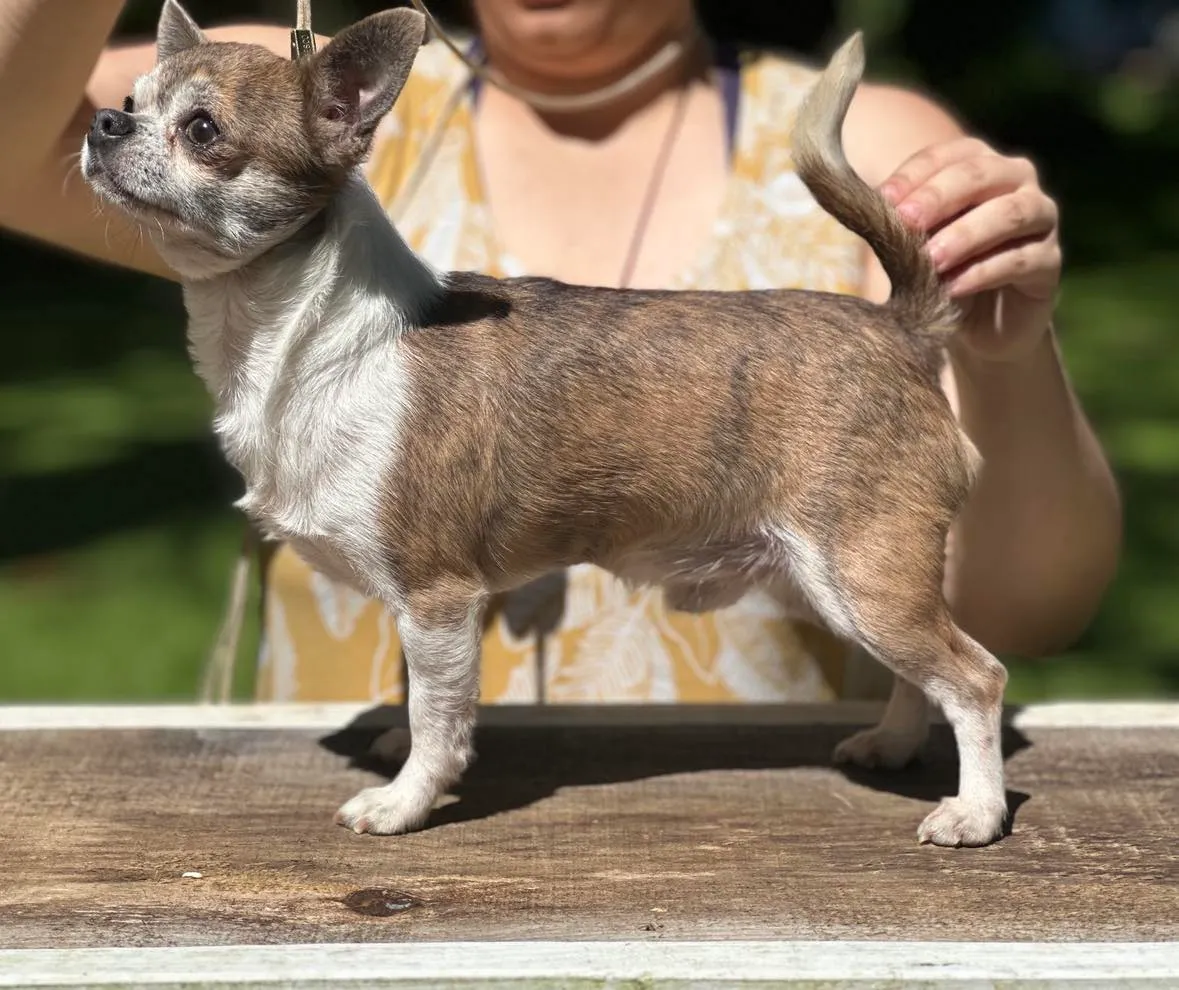
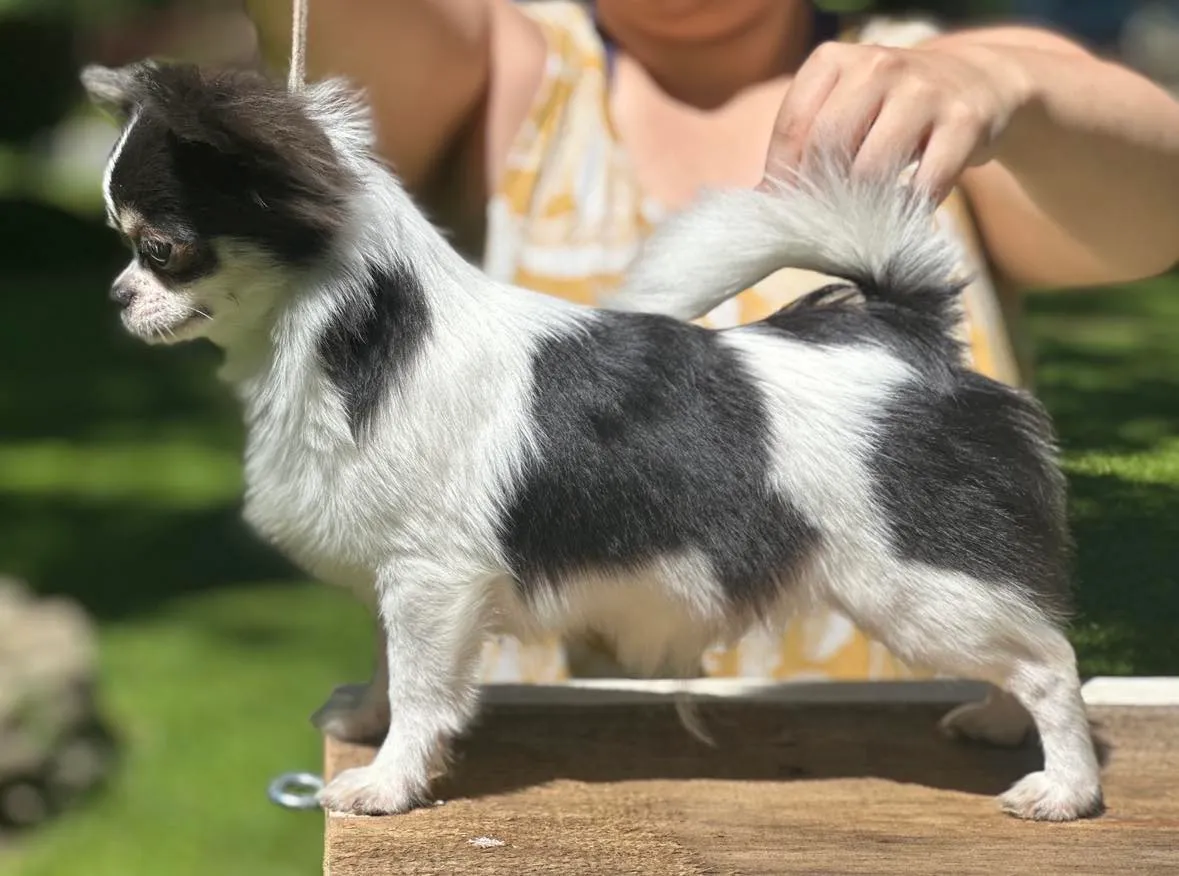
Examples of Dilute in Chihuahuas All the above dogs have been DNA tested as d1, d3, or both.
Understanding Dilute & Blue in Chihuahuas
A Genetics Guide to the MLPH Gene & Dilute Alleles
What is "Dilute" Color?
Dilute coloring in dogs is caused by variations in the MLPH gene (Melanophilin), which controls how pigment is transported and distributed along the hair shaft and in the skin. In normal dogs, pigment molecules spread out evenly. In dilute dogs, the pigment molecules clump together instead of spreading properly, creating a "watered down" or diluted appearance.
Dilution primarily affects eumelanin (black and brown/liver pigment) and may slightly lighten phaeomelanin (red/tan pigment) as well. The result is softer, pastel versions of standard colors.
Dilution Affects ALL Pigmentation
The dilute gene doesn't just lighten coat color—it dilutes all eumelanin pigmentation throughout the dog's body. In dilute Chihuahuas, you'll notice:
- Nose leather: Blue dogs have slate/blue-gray noses instead of black; Lavender dogs have pale lavender/taupe noses instead of chocolate brown
- Eye rims: Match the nose color—blue-gray or pale lavender instead of dark
- Paw pads: Diluted to match—slate gray or pale taupe instead of black or dark brown
- Eyes: Often lighten to pale amber, typically lighter than the amber seen on chocolate dogs
Pro tip: The nose is the easiest way to identify a dilute dog! Even if the coat is entirely tan/sable with no visible black or brown hair, a blue nose means the dog is genetically blue-pigmented (dd).
In Chihuahuas, the most recognizable dilute color is blue (diluted black), but dilution affects all coat colors:
- Black → Blue (slate gray/blue-gray coat with blue-gray nose, pads, and eye rims)
- Chocolate → Lavender (pale greyish-brown/lavender coat with lavender nose, pads, and eye rims — genotype bb/dd)
- Red/Tan → Lighter cream (may appear slightly paler, though dilution affects eumelanin more than phaeomelanin)
"Born Blue": Dilute puppies display their dilute color from birth. Unlike some greying genes that fade a black dog to grey over time, dilute dogs are born with diluted pigment and stay that color for life.
Two dilute alleles (dd) = Dilute coat color + Dilute skin pigment + Pale amber eyes
Dilution Works with ALL Coat Patterns
Here's something important to understand: blue or isabella dogs can have ANY coat pattern or color combination. Dilution doesn't eliminate patterns—it just changes the color of the eumelanin (black or brown pigment) in those patterns.
Common Dilute Pattern Combinations in Chihuahuas:
- Blue Fawn/Blue Sable: A fawn or sable dog has red/tan base color with black-tipped hairs. When diluted, those tips become blue-gray instead of black, creating a blue fawn appearance
- Blue with Tan Points: A black and tan dog (tan points pattern) becomes blue and tan when diluted—the "black" saddle/blanket becomes blue-gray while the tan points stay tan
- Blue Brindle: A brindle dog has black stripes over a red/fawn base. When diluted, those stripes become blue-gray, creating blue brindle
- Solid Blue: A solid black dog becomes solid blue-gray
- Blue Spotted on White: White spotting patterns with blue patches instead of black
Lavender (Dilute Chocolate) Patterns:
Note on terminology: In general dog genetics, dilute chocolate is often called "Isabella" or "Lilac." In Chihuahuas, the proper breed term is Lavender.
Understanding the Lavender Genotype: bb/dd
Lavender requires TWO separate genes working together:
- bb (B locus) = Chocolate/brown pigment. The B gene controls whether eumelanin is black (B) or chocolate/brown (b). A dog needs two copies (bb) to be chocolate instead of black.
- dd (D locus) = Dilute. As we've learned, the D gene controls pigment intensity. A dog needs two copies of the dilute allele (dd) to have diluted pigment.
Put them together: bb makes chocolate + dd dilutes that chocolate = Lavender
So a lavender Chihuahua must be homozygous (have two copies) for BOTH the chocolate gene AND the dilute gene. If the dog is Bb or BB (has even one copy of the dominant black gene), they'll be blue instead of lavender, even if they're dd.
bb (chocolate) + dd (dilute) = Lavender
- Lavender with Tan Points: Chocolate and tan becomes pale greyish-brown with tan points
- Lavender Sable: Chocolate sable becomes pale lavender/taupe tipping
- Solid Lavender: Solid chocolate becomes solid pale greyish-brown/lavender
The Key Point
Whatever pattern your Chihuahua has, if they are dd (dilute), ALL of the black becomes blue-gray and ALL of the chocolate becomes lavender. The pattern stays the same—only the color of the eumelanin changes.
So you might have a gorgeous blue fawn Chihuahua who looks mostly tan with subtle blue shading, but that blue nose will tell you they're genetically blue-pigmented!
The Two Dilute Alleles in Chihuahuas: d1 and d3
Scientists have identified multiple different mutations in the MLPH gene that cause dilution. In Chihuahuas, two variants are relevant: d1 and d3. Both produce the same visual result (dilute coloring and dilute skin pigmentation), but they're different genetic mutations at the molecular level.
d1 Allele
Most common dilute allele found in Chihuahuas and across many breeds. This is the "original" dilute mutation that has been identified and studied the longest. In Chihuahuas, d1 is frequently seen and is the variant most commercial DNA tests identify.
Technical: Single nucleotide deletion causing a frameshift mutation in the MLPH gene
d3 Allele
Less common allele found in Chihuahuas and certain other breeds. d3 produces the same dilute phenotype (coat and skin pigmentation) as d1 but results from a different genetic change. Some DNA tests don't specifically screen for d3, which can occasionally lead to unexpected results in breeding programs—a dog may appear dilute but test as D/D if only d1 is screened.
Technical: A distinct mutation in the MLPH gene, different from d1
Why d3 Matters for Chihuahua Breeders
If you have a blue or isabella Chihuahua that tests as D/D (non-dilute) on a basic panel, they likely carry d3. Many early DNA tests only screened for d1. Always use a comprehensive test that includes both d1 and d3 screening for accurate results in your breeding program.
How Dilute Genetics Work
The MLPH gene has a dominant normal allele (D) and recessive dilute alleles (d1 and d3 in Chihuahuas). A dog needs two copies of any dilute allele to express dilute coloring and dilute skin pigmentation.
Important Genetic Truth
It is genetically impossible for a blue dog to have any black in its coat, or for a lavender to have any chocolate/liver. ALL eumelanin on a dd dog is diluted—every single black or brown hair becomes blue or lavender. If you see true black or brown pigment anywhere on the dog (not just the nose—check brindle stripes, sable tipping, tan points, etc.), the dog is not a dilute.
| Genotype | Appearance | Breeding Implications |
|---|---|---|
| D/D | Normal (non-dilute) color with dark pigment | Cannot produce dilute puppies |
| D/d1 or D/d3 | Normal color with dark pigment, but carrier | Can produce dilute if bred to another carrier or dilute |
| d/d (d1/d1, d1/d3, or d3/d3) | Dilute color with dilute skin pigment | Will pass one dilute allele to all puppies |
Compound Dilutes
A dog can carry two different dilute alleles (d1/d3). Because all dilute alleles are recessive to D but act the same way, any combination of two dilute alleles will produce dilute coloring and dilute skin pigmentation. The different d alleles all behave identically and don't change the shade of the coat—d1/d1, d1/d3, and d3/d3 all look the same.
True Dilute vs. Greying Genes
Some dogs can appear greyish or "blue" but are not actually dilute. The key difference:
True Dilutes ("Born Blues")
- Dilute color is present from birth
- Color stays consistent throughout life
- Nose, eye rims, and paw pads are diluted (blue-gray or lavender)
- Eyes often pale amber
Greying Genes (Not Dilute)
- Puppies are born BLACK or CHOCOLATE with normal dark pigment
- Coat gradually fades to grey as they mature
- Nose remains BLACK or BROWN (this is the giveaway!)
- Eyes typically normal dark color
The Sure-Fire Test: Check the Nose
If a dog looks grey/blue but has a black nose, it is NOT a dilute—it's a black dog with a greying gene. If the dog looks greyish-brown but has a dark chocolate nose, it's not a lavender—it's a chocolate dog with greying.
True dilutes have diluted noses that match their diluted coat. This is absolute and never varies.
Note: Greying genes are rare in Chihuahuas but common in breeds like Bearded Collies, Old English Sheepdogs, Kerry Blue Terriers, and Poodles. In Chihuahuas, if you see a grey/blue dog, it's almost certainly a true dilute with the dd genotype.
Health Considerations
The truth about dilute health: The majority of blue and lavender Chihuahuas are completely healthy. It's often claimed that dilute dogs are less healthy than those with normal pigment, but this misconception likely comes from the prevalence of Color Dilution Alopecia (CDA) in some breeds. CDA does not affect all breeds or all dilute dogs.
Color Dilution Alopecia (CDA)
Color Dilution Alopecia is a skin and coat condition that affects some (but not all) dilute-colored dogs. It causes hair loss, dry/flaky skin, and recurrent skin infections, typically appearing between 6 months and 3 years of age.
Important facts about CDA:
- CDA affects coat texture and length only, not overall health
- Not all dilute dogs develop CDA—most dilutes have normal, healthy coats
- The exact cause is still being researched, but it appears to have a genetic component beyond just the dilute gene itself
- Some breeds/lines have higher incidence than others
- No genetic test currently exists for CDA susceptibility
Breeding Dilute to Dilute
Some breeders claim that dilute dogs should never be bred together, but there is no genetic basis for this claim. In fact:
- Breeds that come only in dilute (like the Weimaraner) or have very high incidence of dilute are far less likely to have CDA
- Until genetic testing for CDA becomes available, breeding healthy dilute to healthy dilute may actually help reduce CDA in lines by selecting away from affected individuals
- The best practice is to only breed dilute dogs that have demonstrated normal, healthy coats
Responsible Breeding Recommendation
Many breeders choose to breed dilute to carrier (D/d) rather than dilute to dilute for genetic diversity. Both approaches can be responsible. What matters most is:
- Breeding only dilutes with healthy skin and coats
- Monitoring offspring for any skin/coat issues
- Maintaining good nutrition and grooming practices
- DNA testing to understand your breeding program genetics
General Skin Care
Dilute dogs may benefit from quality nutrition, regular gentle grooming, and appropriate skincare to maintain coat health, but these are good practices for all dogs regardless of color.
DNA Testing for Dilute
Genetic testing can identify whether your Chihuahua is:
- Clear (D/D) - No dilute alleles
- Carrier (D/d) - One dilute allele, normal appearance with dark skin pigment
- Dilute (d/d) - Two dilute alleles, dilute appearance with dilute skin pigment (blue-gray or lavender nose, eye rims, paw pads)
Testing Panel Tip: Make sure your DNA test screens for both d1 and d3 variants. Some older or basic panels only test for d1, which could miss d3 carriers or dilutes. This is especially important in Chihuahuas where d3 does occur.
Comprehensive panels from services like Embark, Paw Print Genetics, or Animal Genetics typically include both variants. If you have a visually dilute dog (check the nose and paw pads!) that tests D/D on an older panel, request testing that includes d3.
Full Dilute Panel for Chihuahuas = d1 + d3 screening
Quick Reference Summary
- Dilute = MLPH gene mutation that causes pigment to clump instead of spreading evenly
- Affects eumelanin (black and brown/liver pigment) in both coat AND skin
- Look at the nose! This is the easiest way to identify a dilute—blue-gray or lavender nose = dilute dog
- Eyes also affected: Often pale amber, lighter than chocolate dogs' amber eyes
- Skin pigment matches: Nose, eye rims, and paw pads are all diluted
- "Born blue": Dilute puppies show diluted color from birth and keep it for life
- Works with any pattern: Blue fawn, blue and tan, blue brindle, solid blue, lavender with tan points—dilution changes the color, not the pattern
- Genetically impossible: A blue dog cannot have any true black in the coat; a lavender cannot have any chocolate/liver
- Two alleles in Chihuahuas: d1 (common) and d3 (less common but present)
- Recessive inheritance: Need two dilute alleles (dd) for dilute appearance
- Any combination works: d1/d1, d1/d3, or d3/d3 all produce identical dilute color
- Most dilutes are healthy: CDA affects only some dilutes and only affects coat, not overall health
- DNA testing: Use comprehensive panels that screen both d1 and d3
- Responsible breeding: Breed healthy dilutes with good coats; know your dogs' genotypes